Combustion Gases and Diesel Emissions in Industrial Facilities
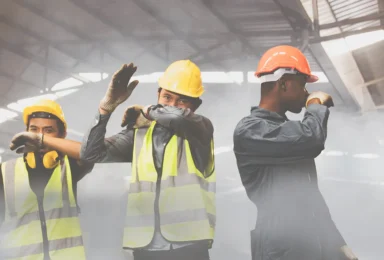
Diesel-powered vehicles, forklifts, trucks and combustion equipment can release harmful gases and airborne particulates into industrial environments. In enclosed or poorly ventilated facilities, these emissions can accumulate, increasing worker exposure risks and creating workplace air quality challenges.
Understanding Combustion Emissions
Combustion processes can generate several airborne contaminants that require appropriate management, including:
- Carbon monoxide (CO): A toxic, colourless gas that can cause serious health effects at elevated concentrations.
- Nitrogen dioxide (NO2): A combustion-related gas that can irritate the respiratory system.
- Diesel particulate matter (DPM): Fine particles associated with respiratory disease and an increased risk of cancer.
- Carbon dioxide (CO2): A combustion by-product that can accumulate in inadequately ventilated spaces.
Transport depots, logistics warehouses, maintenance workshops and manufacturing facilities may be particularly exposed where combustion-powered vehicles or equipment operate indoors.
New Australian Workplace Exposure Limits from December 2026
From 1 December 2026, Australia will transition to updated Workplace Exposure Limits (WEL) for airborne contaminants, replacing the existing Workplace Exposure Standards (WES).
Importantly, a new workplace exposure limit of 0.01 mg/m³ for diesel particulate matter, measured as respirable elemental carbon, will apply under the national framework, subject to relevant jurisdictional implementation arrangements.
These changes reinforce the importance of assessing workplace emissions, reviewing existing exposure controls and preparing appropriate ventilation and monitoring strategies.
The Role of Industrial Ventilation
Managing combustion emissions requires a combination of appropriate equipment selection, emission controls, maintenance and ventilation.
Source extraction and other engineering controls should be prioritised where necessary. Building-wide ventilation can complement these measures by improving general airflow and assisting with the dilution and removal of residual airborne contaminants.
Ventilation requirements should be assessed against the specific emissions, building configuration and operational conditions of each facility.
How Airocle Supports Industrial Air Quality
Airocle designs and manufactures engineered natural ventilation systems for large industrial buildings, utilising wind-driven and thermal airflow to support air movement and the removal of accumulated heat and airborne contaminants.
Where suitable, these solutions can form part of a broader air quality management strategy for facilities experiencing combustion-related emissions.
Improve Air Quality in Your Industrial Facility
Understanding contaminant sources, worker exposure and building airflow is essential when developing an effective industrial ventilation strategy.
Looking for an engineered ventilation solution?
Explore Airocle’s Industrial Fumes & Airborne Contaminants Solutions →
References: